Dyspareunia Treatment in Busan, Korea |
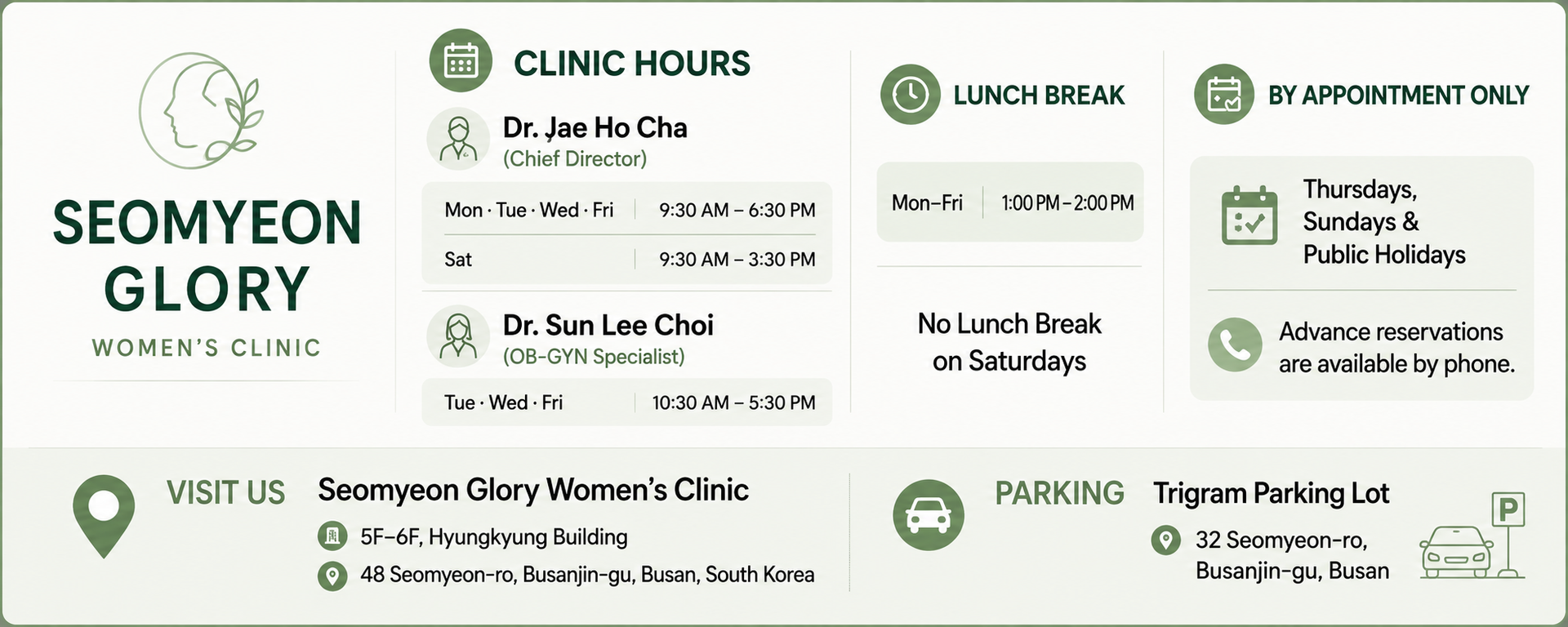
Seomyeon Glory Women's Clinic
Dyspareunia, or pain during sexual intercourse, can be caused by vaginal dryness, infections, endometriosis, pelvic floor dysfunction, hormonal changes, or other gynecological conditions. At Seomyeon Glory Women's Clinic in Busan, English-speaking OBGYN specialists provide comprehensive evaluation, diagnosis, and personalized treatment for dyspareunia for local and international patients.
Dyspareunia Treatment in Busan, Korea
Pain during sexual intercourse is a common but often underreported condition that can significantly affect physical comfort, emotional well-being, and intimate relationships. Although occasional discomfort may occur, persistent or recurrent pain is not considered normal and should be evaluated by a qualified OBGYN.
At Seomyeon Glory Women's Clinic, our experienced English-speaking OBGYN specialists provide compassionate, confidential care to identify the underlying cause of dyspareunia and develop individualized treatment plans that improve comfort, sexual health, and overall quality of life.
What Is Dyspareunia?
Dyspareunia is the medical term for persistent or recurrent pain during or after sexual intercourse.
Pain may occur:
- At the vaginal opening
- Deep inside the pelvis
- During penetration
- During deep intercourse
- Immediately after intercourse
- Several hours after intercourse
The pain may be mild or severe and can affect women of all ages.
Common Causes of Dyspareunia
Pain during intercourse may be caused by:
- Vaginal dryness
- Menopause
- Low estrogen levels
- Vaginal infections
- Yeast infections
- Bacterial vaginosis
- Sexually transmitted infections (STIs)
- Endometriosis
- Adenomyosis
- Pelvic inflammatory disease (PID)
- Ovarian cysts
- Uterine fibroids
- Pelvic floor muscle dysfunction
- Vulvodynia
- Previous childbirth or pelvic surgery
- Emotional or psychological factors
Because many conditions can cause similar symptoms, a comprehensive evaluation is essential.
Symptoms That Should Be Evaluated
You should schedule a gynecology consultation if you experience:
- Pain during penetration
- Deep pelvic pain during intercourse
- Burning or stinging sensations
- Vaginal dryness
- Pelvic pain after intercourse
- Bleeding after intercourse
- Recurrent pain during intimacy
- Pain associated with menstrual disorders
- Difficulty maintaining sexual activity because of pain
Persistent symptoms should always be evaluated to identify the underlying cause.
How Is Dyspareunia Diagnosed?
Your evaluation may include:
- Medical history review
- Sexual health history
- Symptom assessment
- Pelvic examination
- Vaginal examination
- Pelvic ultrasound
- Vaginal swab testing
- STI screening
- Hormone evaluation
- Assessment of pelvic floor muscles
- Additional testing when appropriate
Our specialists use a thorough diagnostic approach to identify both physical and hormonal causes of pain.
Treatment for Dyspareunia
Treatment depends on the underlying diagnosis and may include:
- Treatment for vaginal infections
- Hormonal therapy
- Vaginal estrogen therapy
- Vaginal moisturizers and lubricants
- Pelvic floor physical therapy referral
- Treatment for endometriosis
- Ovarian cyst management
- Fibroid treatment
- Pain management
- Lifestyle recommendations
- Menopause management
- Follow-up care
Your treatment plan is individualized according to your symptoms, medical history, and reproductive stage.
Can Dyspareunia Be Prevented?
Some causes of dyspareunia can be reduced by:
- Treating vaginal infections promptly
- Managing menopausal symptoms
- Using appropriate lubricants when needed
- Maintaining regular gynecological check-ups
- Seeking early treatment for pelvic pain or hormonal disorders
Early diagnosis often leads to better symptom control and improved quality of life.
Dyspareunia Care for International Patients
Seomyeon Glory Women's Clinic welcomes international patients living in or visiting Busan.
We provide:
- English-speaking OBGYN consultations
- Comprehensive pelvic examinations
- Pelvic ultrasound
- Vaginal swab testing
- STI screening
- Hormone evaluation
- Personalized treatment plans
- Efficient appointments
- Compassionate and confidential care
Whether your symptoms are recent or long-standing, our clinic provides evidence-based care to improve comfort and restore sexual health.
Why Choose Seomyeon Glory Women's Clinic?
Patients choose our clinic for:
- Experienced OBGYN specialists
- Expertise in pelvic pain and sexual health
- Comprehensive diagnostic evaluation
- Personalized treatment plans
- Hormonal and menopausal care
- Pelvic pain management
- English-speaking support
- Comfortable and private environment
- Convenient Seomyeon location in Busan
We are committed to identifying the cause of dyspareunia and providing compassionate, individualized treatment that improves both reproductive health and quality of life.
Frequently Asked Questions
What is dyspareunia?
Dyspareunia is the medical term for persistent or recurrent pain during or after sexual intercourse. The pain may occur at the vaginal opening or deeper in the pelvis.
What causes pain during sexual intercourse?
Common causes include vaginal dryness, menopause, infections, endometriosis, adenomyosis, pelvic floor dysfunction, ovarian cysts, uterine fibroids, and hormonal changes.
Can vaginal dryness cause dyspareunia?
Yes. Vaginal dryness is one of the most common causes of painful intercourse, particularly during menopause, breastfeeding, or periods of low estrogen.
How is dyspareunia diagnosed?
Diagnosis may include a pelvic examination, pelvic ultrasound, vaginal swab testing, STI screening, hormone evaluation, and assessment of pelvic floor muscles depending on your symptoms.
Can dyspareunia be treated?
Yes. Treatment depends on the underlying cause and may include medications, hormone therapy, lubricants, pelvic floor therapy, treatment of infections, or management of gynecological conditions.
Should I see a doctor if sex is painful?
Yes. Persistent or recurrent pain during intercourse is not considered normal and should be evaluated by an OBGYN to determine the underlying cause.
Do you provide English consultations?
Yes. Seomyeon Glory Women's Clinic offers English-speaking consultations and comprehensive gynecological care for international patients.
Can international patients receive treatment in Korea?
Yes. International patients are welcome to receive evaluation, diagnosis, pelvic ultrasound, STI screening, treatment, and follow-up care for dyspareunia during their stay in Busan.